Health and Safety Policy for Landscaping Sutton
 This Health and Safety Policy sets out the standards expected across all landscaping Sutton projects, whether the work involves garden maintenance, planting, turfing, patio preparation, fencing, or larger outdoor transformations. Our approach is built on prevention, clear responsibilities, and consistent safe working practices. We recognise that landscaping work can involve manual handling, powered equipment, uneven ground, weather exposure, and interaction with the public, so every task must be planned carefully and carried out with safe systems of work.
The purpose of this policy is to protect workers, clients, visitors, subcontractors, and anyone else who may be affected by our activities. We aim to reduce hazards wherever possible and to manage any remaining risks through training, supervision, and effective control measures. A strong health and safety culture is essential in landscape maintenance Sutton and all related services, because good results depend on careful preparation as much as technical skill.
All staff are expected to take personal responsibility for safety. This means following instructions, using equipment correctly, reporting defects promptly, and refusing to carry out any task that appears unsafe. Supervisors must ensure that work is properly planned and that suitable resources are available before work begins. In every stage of landscaping services, from site clearance to final tidy-up, safety must remain a priority.
General Responsibilities
Management will provide the leadership and resources needed to maintain safe operations. This includes risk assessments, method statements where appropriate, suitable tools, and appropriate personal protective equipment. Workers are required to cooperate with these arrangements and to follow all site rules. Any unsafe condition should be reported immediately so that action can be taken without delay.
Contractors and subcontractors must meet the same standards as our own team. They should be competent for the work they undertake and must use equipment that is well maintained and suitable for the task. When working on shared sites, communication is essential to avoid conflict between different trades, reduce confusion, and maintain safe access routes.
We also expect a professional approach to housekeeping. Materials should be stored neatly, waste removed regularly, and walkways kept clear. Slips, trips, and falls are among the most common risks in outdoor work, so attention to tidiness is a simple but important part of a safe landscaping company policy.
Key Risk Areas in Landscaping Work
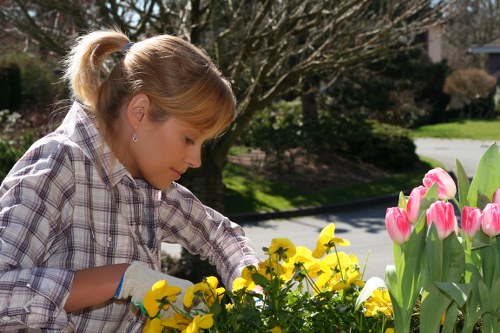 One of the main hazards in landscaping Sutton is manual handling. Bags of soil, paving slabs, timber, compost, and machinery parts can all cause strain or injury if lifted incorrectly. Tasks should be assessed in advance, loads should be divided where possible, and mechanical aids should be used when needed. Workers must not attempt lifts beyond their capability.
Powered tools and machinery present another significant risk. Strimmers, hedge cutters, lawn mowers, compactors, and saws must only be used by trained and authorised personnel. Guards, safety features, and controls must never be tampered with. Before use, equipment should be checked for damage, loose fittings, fuel leaks, blunt blades, or other signs of wear.
Weather conditions also affect safety. Wet surfaces, extreme heat, strong winds, and cold weather can all create additional dangers. Work should be adjusted to suit the conditions, with breaks, hydration, sun protection, and appropriate clothing provided where required. In garden landscaping Sutton, safe judgment is often the difference between a productive day and an avoidable accident.
Control Measures and Safe Working Practices
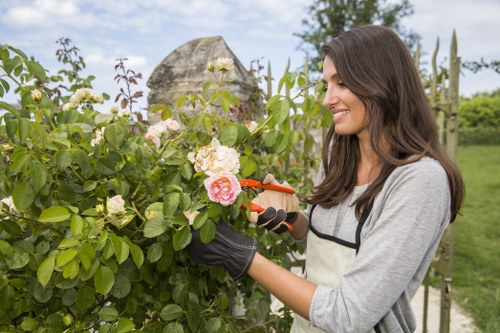 Before any project starts, a suitable risk assessment must be completed. This should identify hazards, consider who may be harmed, and set out practical controls. The assessment should be reviewed if the job changes or if unexpected hazards arise. For example, hidden services, unstable ground, sharp debris, or restricted access may require revised procedures.
Work areas should be inspected before activities begin. If needed, barriers, signs, or temporary exclusion zones should be put in place to protect others. This is especially important where members of the public, children, pets, or neighbouring properties may be nearby. Good communication with clients and site users helps prevent misunderstandings and keeps everyone informed.
Personal protective equipment must be worn where necessary and kept in good condition. Depending on the task, this may include gloves, eye protection, hearing protection, high-visibility clothing, safety boots, and dust masks. PPE is the last line of defence, not a substitute for safe methods, and it must be selected to suit the specific conditions of the landscaping project.
Training, Supervision, and Incident Reporting
All workers must receive the information and instruction they need to work safely. This includes induction on general safety rules, task-specific training, and refresher instruction when equipment or procedures change. New or inexperienced staff should be supervised closely until they demonstrate competence. A well-trained team is essential to safe landscape services.
Accidents, near misses, property damage, and unsafe conditions must be reported as soon as possible. Prompt reporting allows trends to be identified and corrective action to be taken before a more serious incident occurs. Records should be kept so that lessons can be learned and improvements introduced across future jobs.
First aid arrangements must be available and appropriate to the nature of the work. Workers should know the location of first aid supplies and understand what to do in the event of an emergency. If a serious incident occurs, work should stop immediately and the area secured until it is safe to continue.
Review and Continuous Improvement
 This policy will be reviewed regularly to ensure it remains effective and relevant. Reviews should consider changes in work activities, equipment, legislation, and any incidents or near misses that may reveal opportunities for improvement. Safe landscaping depends on learning from experience and maintaining high standards over time.
Everyone involved in our operations is expected to contribute to a positive safety culture. That means speaking up about hazards, supporting colleagues, and treating safety as a shared responsibility rather than a separate task. By applying consistent controls and thoughtful planning, we can deliver reliable, high-quality work while protecting health and wellbeing.
 In summary, this policy reflects our commitment to carrying out landscaping Sutton work responsibly, professionally, and safely. Through clear responsibilities, thorough assessment, proper training, and disciplined site practices, we aim to create outdoor spaces without compromising the wellbeing of those who build and use them.